Modern digital marketing encompasses multiple specialized channels, each requiring unique strategies and continuous optimization. Understanding these service types helps businesses choose the right mix for their goals and budget.
Search Engine Optimization (SEO)
SEO services focus on improving your website's visibility in organic search results. This includes technical SEO (site speed, mobile optimization, crawlability), on-page optimization (content, keywords, meta tags), and link building (earning backlinks from authoritative sites). Traditional agencies conduct monthly audits and implement changes gradually, while AI platforms can identify and prioritize SEO opportunities instantly.
Effective search engine optimization requires continuous monitoring of algorithm updates, competitor strategies, and ranking fluctuations. The goal is to achieve first-page rankings for high-value keywords that drive qualified traffic and conversions.
AI SEO & Generative Engine Optimization (GEO)
AI SEO represents the evolution of traditional optimization. Machine learning algorithms analyze search patterns, predict ranking factors, and automatically adjust content strategies based on performance data. This approach identifies content gaps, discovers long-tail keyword opportunities, and optimizes for user intent far faster than manual research.
Generative Engine Optimization (GEO) is the newest frontier optimizing content for AI-powered search experiences like ChatGPT, Google's SGE (Search Generative Experience), and other AI assistants. As users increasingly get answers directly from AI rather than clicking through to websites, GEO ensures your brand appears in these AI-generated responses.
Pay-Per-Click (PPC) Marketing
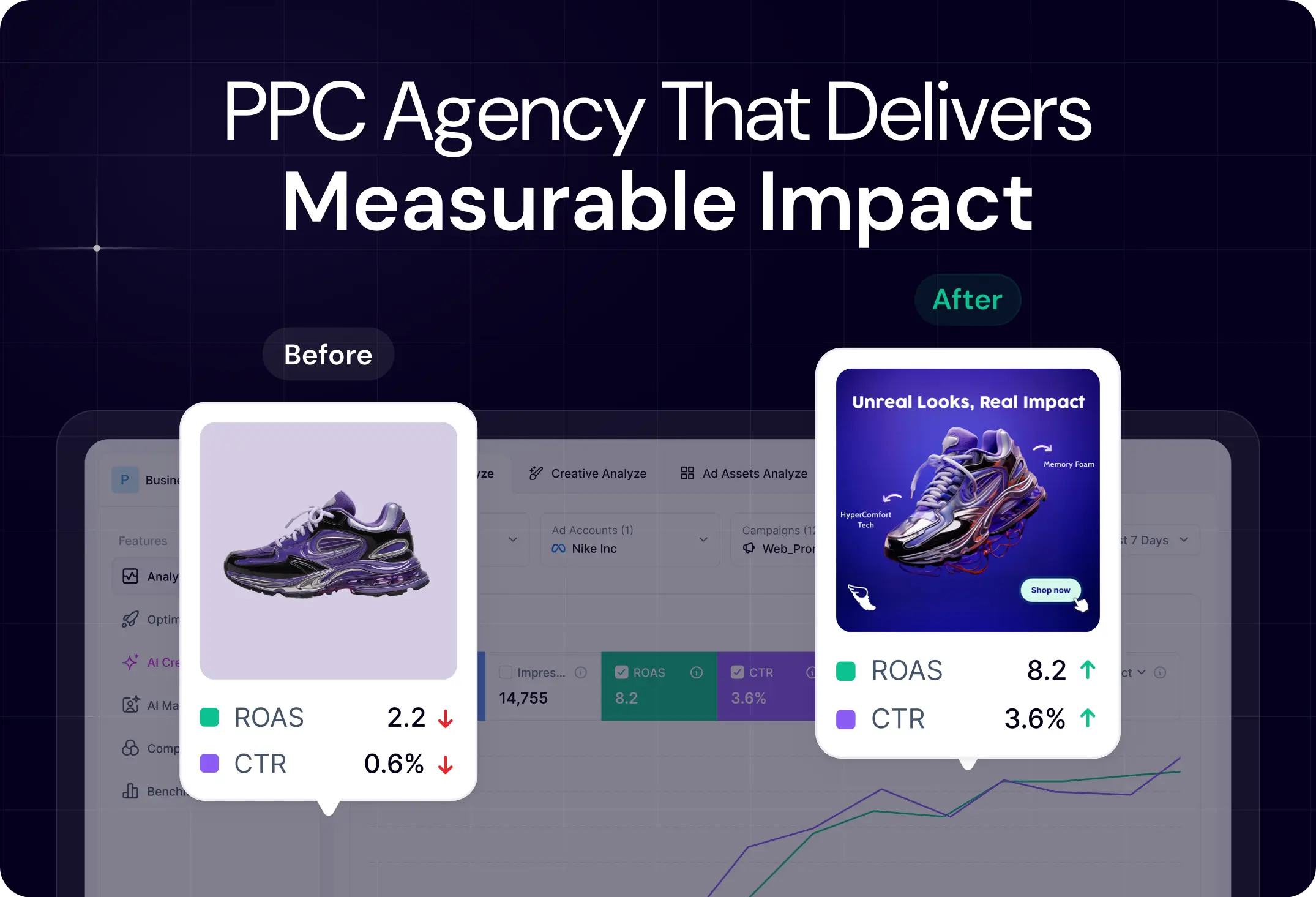
PPC advertising delivers immediate visibility through paid placements on search engines and social platforms. Google Ads optimization and Facebook ads optimization require constant monitoring, bid adjustments, and creative testing to maintain profitability.
Traditional agencies check campaigns daily or weekly, making manual adjustments based on aggregated reports. This creates optimization gaps where budget is wasted on underperforming ads. AI-powered PPC optimization operates in real-time, adjusting bids every few minutes based on conversion likelihood, competition levels, and audience behavior.
Understanding Google ad cost and Facebook ad cost dynamics is crucial these fluctuate constantly based on competition, time of day, device type, and audience characteristics. Automated systems respond to these changes instantly, while human managers only see the impact hours or days later.
Social Media Marketing (SMM)
Social media marketing builds brand awareness, engages audiences, and drives traffic across platforms like Facebook, Instagram, LinkedIn, TikTok, and Twitter. This includes content creation, community management, Influencer partnerships, and paid social advertising campaigns.
Traditional agencies assign account managers who post content, respond to comments, and run campaigns during business hours. AI platforms schedule posts at optimal engagement times, automatically respond to common inquiries, and continuously test creative variations to maximize performance.
Email Marketing
Email marketing remains one of the highest-ROI channels, delivering $36-42 for every dollar spent. Effective strategies include list segmentation, behavioral triggers, personalization, and A/B testing across subject lines, content, and send times.
Traditional agencies design templates and schedule broadcasts manually. AI platforms analyze individual subscriber behavior, predict optimal send times for each recipient, dynamically personalize content based on interests, and automatically test thousands of variations to identify winning combinations.
Web Design & Development
Professional web design creates the foundation for all digital marketing efforts. Your website must load quickly, display perfectly on all devices, guide visitors toward conversions, and provide seamless user experiences. Conversion rate optimization (CRO) continuously tests and improves design elements to maximize results.
Traditional agencies complete website projects over weeks or months with fixed designs. AI-powered platforms use heatmaps, session recordings, and behavioral analytics to identify friction points and automatically suggest improvements based on actual user behavior patterns.